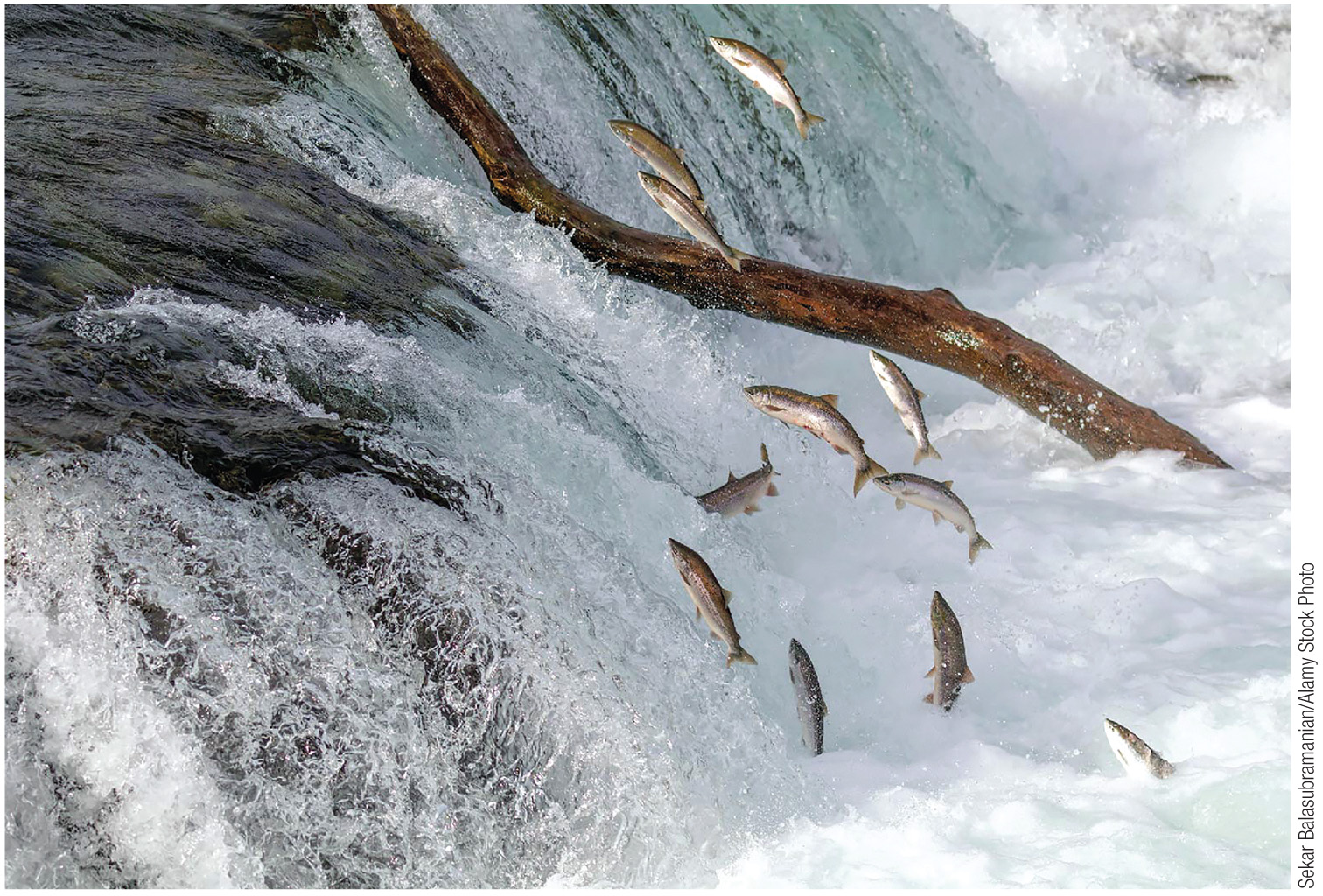
Chapter 5 · Conservation

Conservation

Why Is It Important to Protect Biodiversity?
Chapter 5 · Outline

What we'll cover

5.1What Is the Status of Earth's Biodiversity?
5.2Why Protect Biodiversity?
5.3What Are Protected Areas?
5.4What Are the Limitations of Protected Areas, and Are There Alternatives?
5.5Can Laws Protect Biodiversity?
5.6What Can Be Done to Reduce Biodiversity Loss?
5.7What Can Be Done to Fix Damage That Has Already Occurred?
5.8What Can I Do?
Announcements

Upcoming Assignments

Here's what's on deck. Check Canvas for full instructions and submission links.

1
InQuizitive: Chapter 5 — Conservation: Why Is It Important to Protect Biodiversity?
2
Discussion: What Would You Do? Exercise 1
Announcements · Getting Started

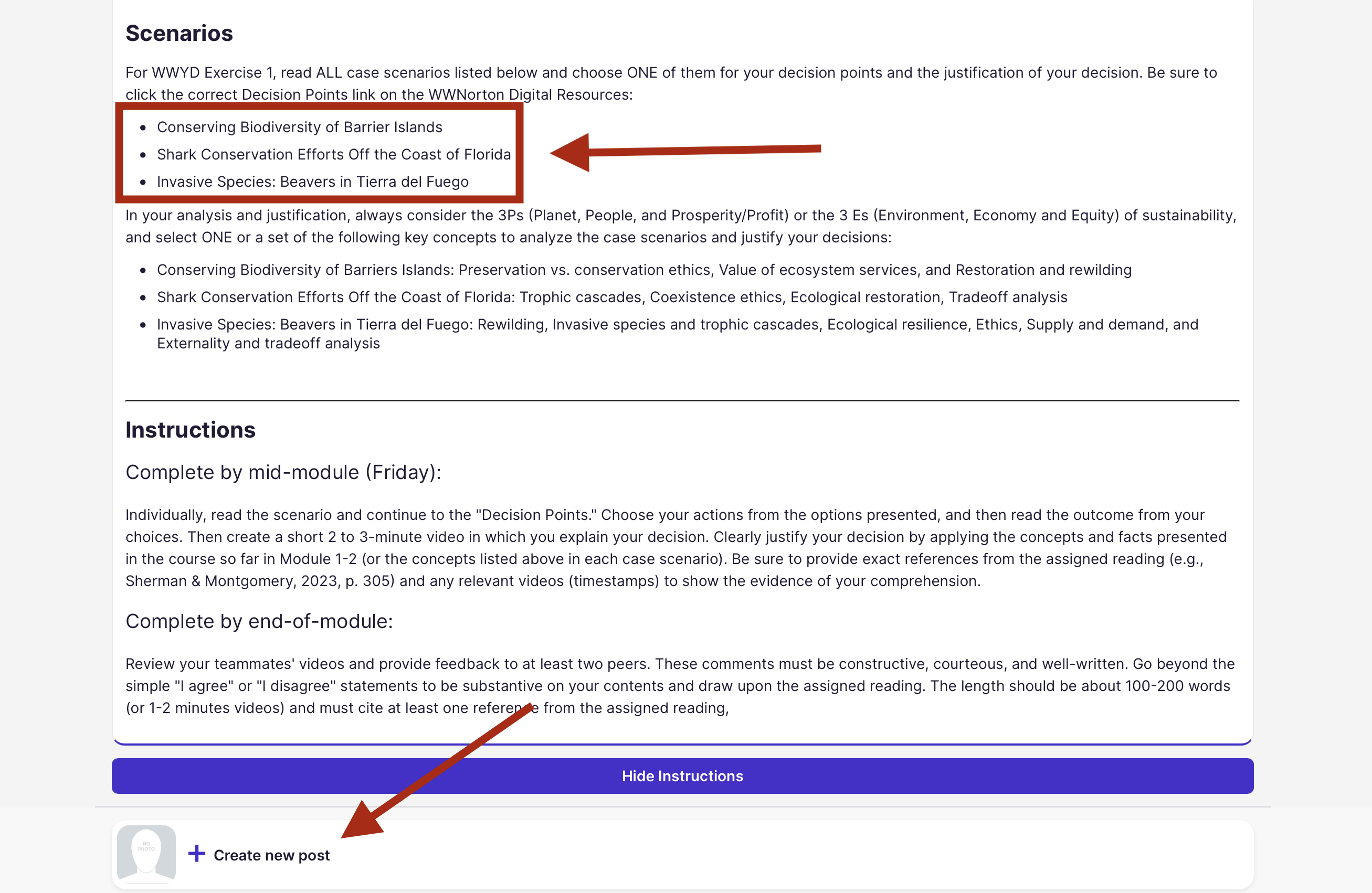
What Would You Do? Exercise 1

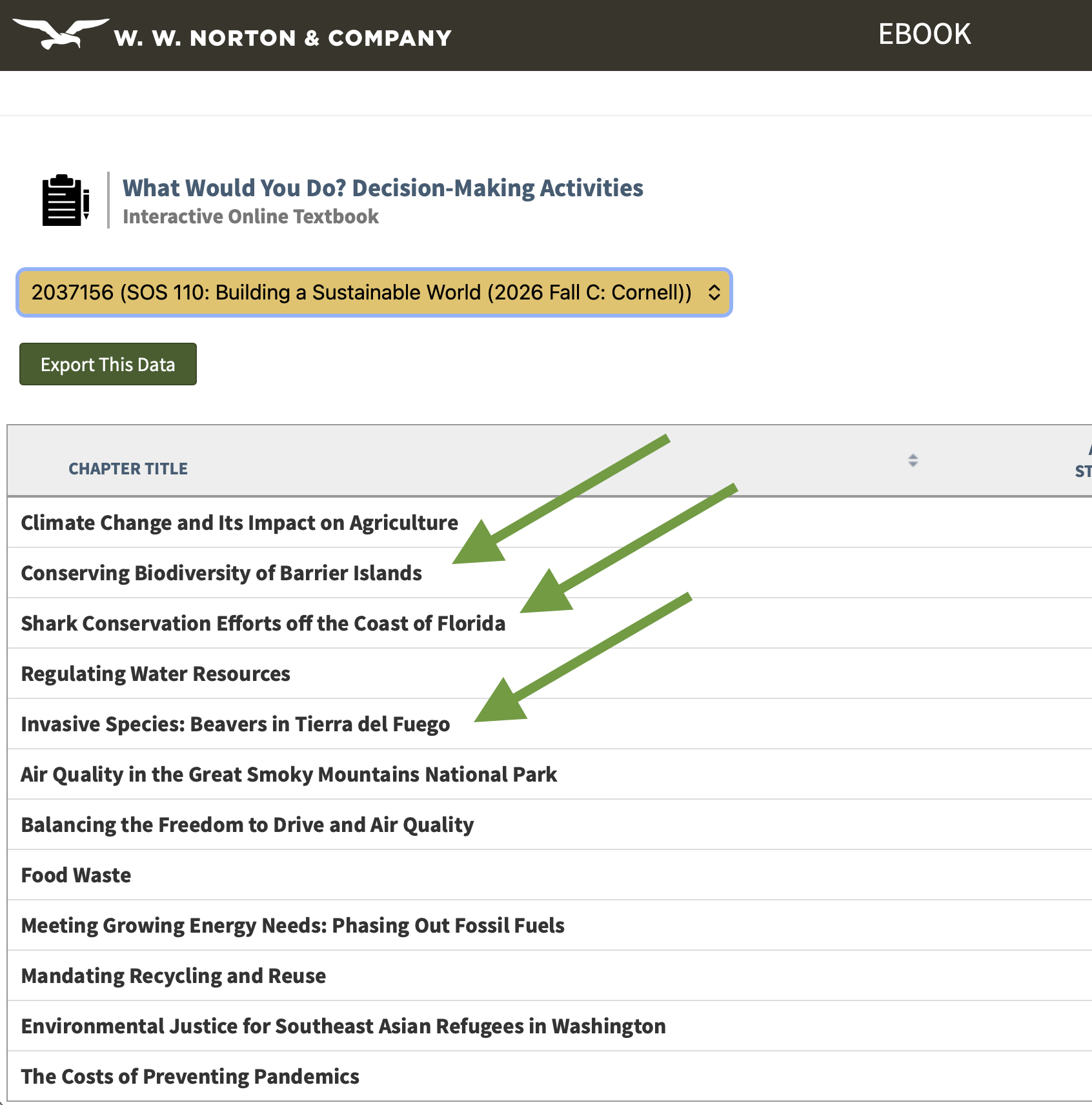
1 · Decide
Skim all the scenarios, pick one, and click through its Decision Points. Weigh the tradeoffs using Module concepts.
2 · Record (2–3 min)
Video due Friday. ~1 min introducing the case, ~2 min justifying your choice. Embed the video in Harmonize.
3 · Discuss
All posts due Sunday. Comment on 2+ classmates' videos and reply to comments on yours (~100 words), using Module concepts.
Announcements · Getting Started

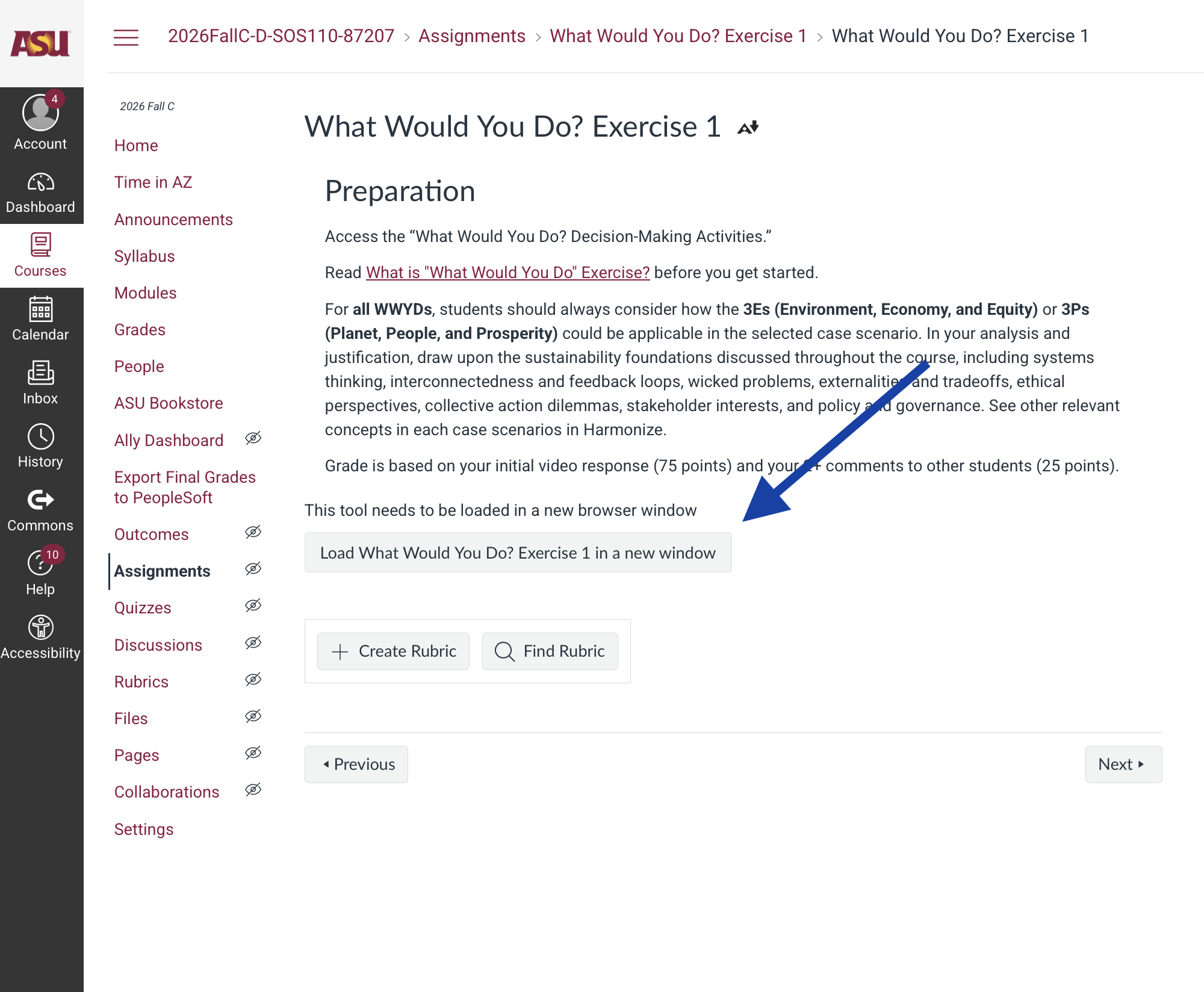
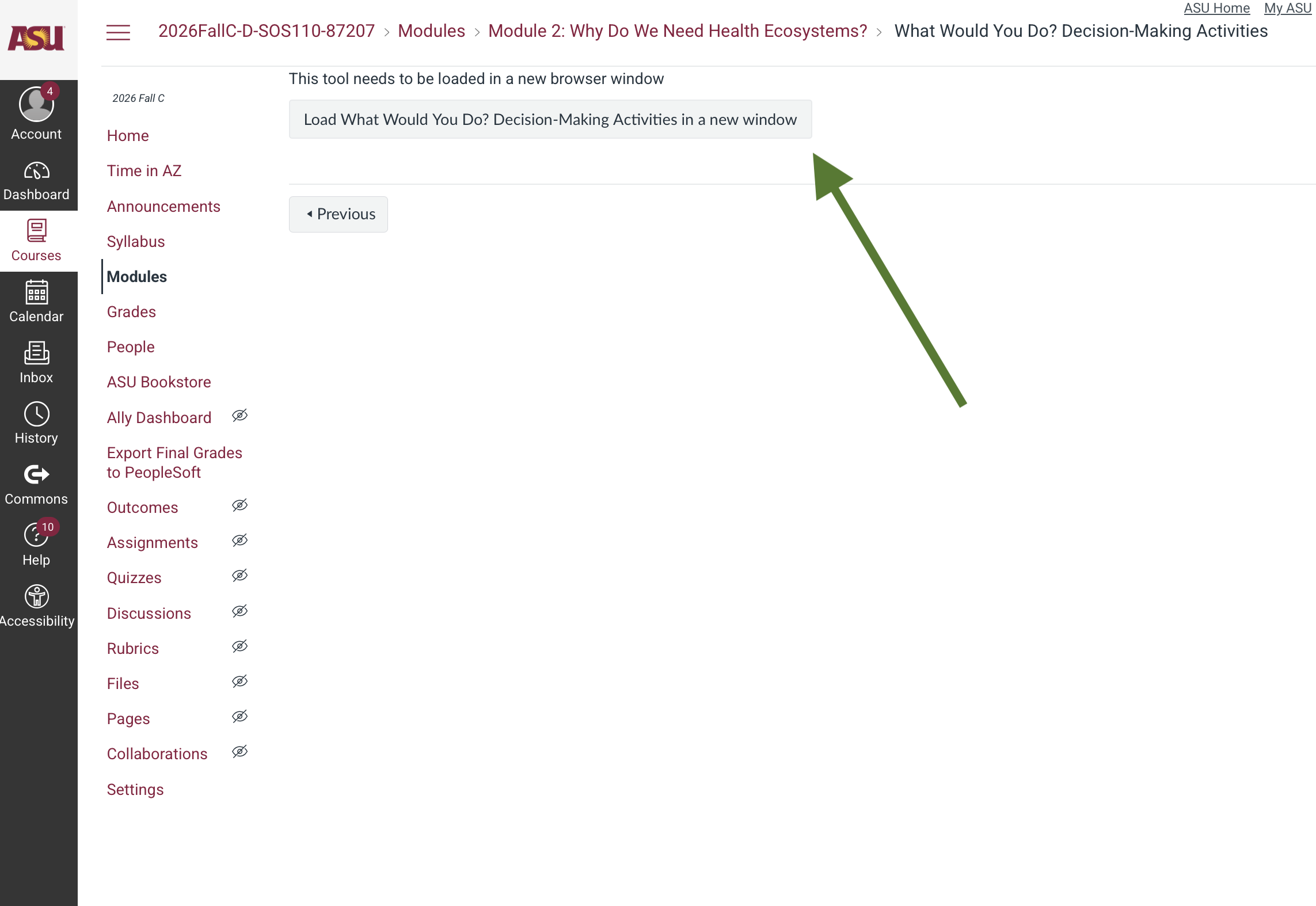
Where to find What Would You Do? Exercise 1
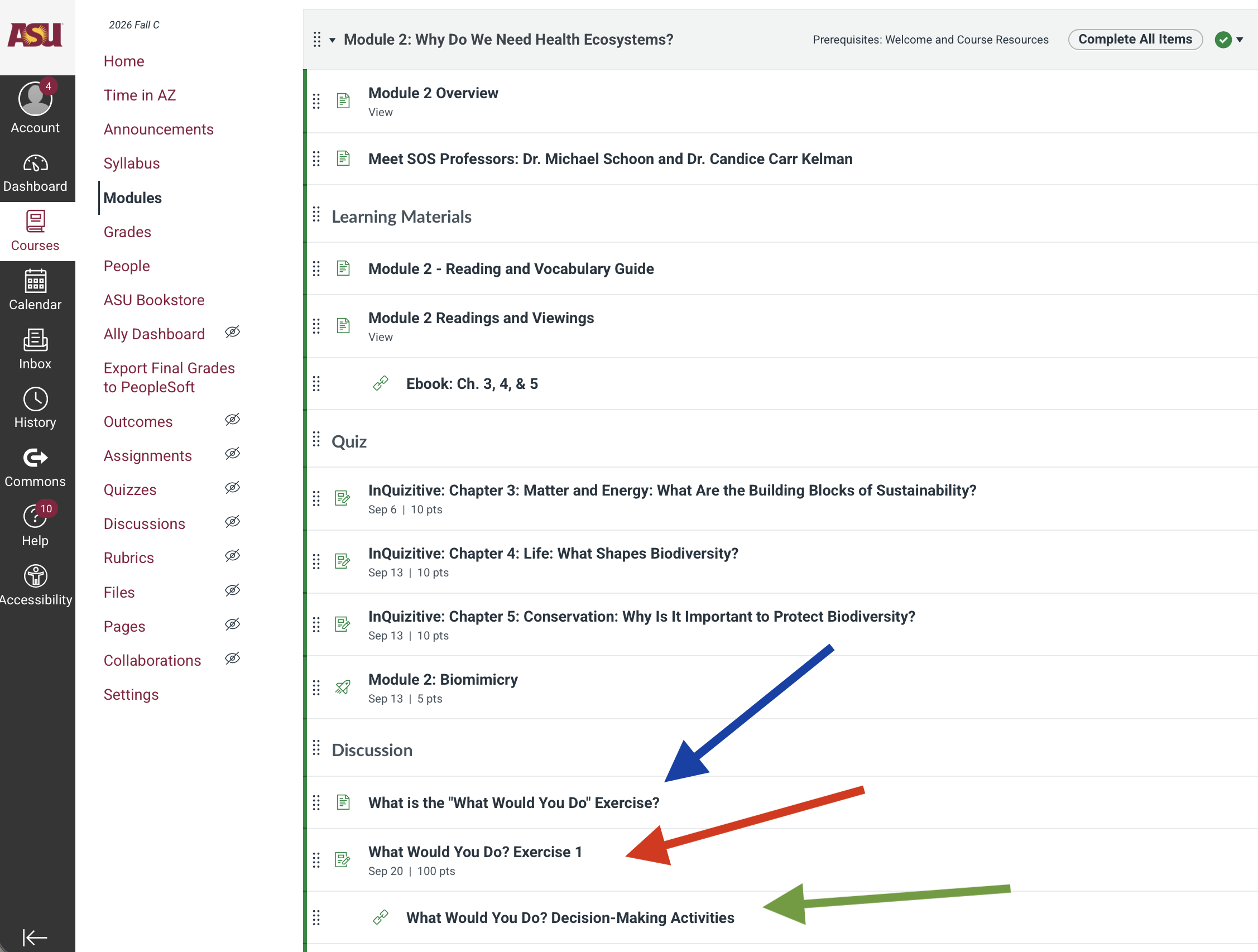
Canvas Modules page for Module 2, with a blue arrow pointing to What is the What Would You Do Exercise, a red arrow pointing to What Would You Do? Exercise 1, and a green arrow pointing to What Would You Do? Decision-Making Activities
In Canvas → Modules → Module 2, under Discussion: the instructions (blue), the assignment (red), and the Decision-Making Activities (green).
Click to advance 1 / 5
Introduction

Is conservation important?
Introduction · Really Hard Questions (1 of 3)

There is a cute furry creature that lives in a forest outside Flagstaff. It is important to preserve that forest.

Drag the slider to how you feel, then lock in. Your instructor reveals where the class landed.
Agree
Neutral
Disagree
0 responses Drag the slider, then lock in your response.
Introduction · Really Hard Questions (2 of 3)

Conservation is important.

Drag the slider to how you feel, then lock in. Your instructor reveals where the class landed.
Agree
Neutral
Disagree
0 responses Drag the slider, then lock in your response.
Introduction · Really Hard Questions (3 of 3)

We should spend more money to protect biodiversity.

Drag the slider to how you feel, then lock in. Your instructor reveals where the class landed.
Agree
Neutral
Disagree
0 responses Drag the slider, then lock in your response.
5.1 · What Is the Status of Earth's Biodiversity?

A Human-Driven Sixth Mass Extinction

Habitat Destruction
Agriculture, deforestation, and urbanization — the most severe driver. Many habitats so fragmented that species lose the genetic diversity needed for viability.
Overexploitation
Humans have overused resources like the passenger pigeon; today, modern fishing technologies result in overharvesting of economically viable seafood species.
Climate & Water
Dammed rivers, changed fish migrations, large water withdrawals, pollution, and dead zones — plus arctic ice loss and coral bleaching from ocean acidification and warming.
5.2 · Types of Ecosystem Services

Ecosystem Services

Provisioning Services
Ecosystems provide goods that humans consume or use (water, wood, pharmaceutical products).
Regulating Services
Natural processes of ecosystems provide favorable conditions for humans (water filtration, flood control, pollination).
Supporting Services
The most essential services — the fundamental conditions on which other ecosystem services depend (photosynthesis).
Cultural Services
Enhance quality of life, such as the recreation and spiritual values of ecosystems to people.
5.2 · Why Protect Biodiversity?

Instrumental and Intrinsic Value

2005 Millennium Ecosystem Assessment: loss of species diversity reduces both the productivity and resilience of ecosystems.

  • Instrumental value: the usefulness of a particular species for human purposes.
  • Intrinsic value: the value of something in and of itself, apart from its usefulness to others.
  • Just as we rely on public services such as fire protection, we rely on ecosystem services, such as a wetland's ability to naturally purify water, a resource necessary for our survival.

5.2 · Valuing Ecosystem Services

Putting a Price on Nature's Services

  • Value chains place economic value on ecosystem services by integrating the value of a good and the market value of things linked to the production of that good.
  • Economists may report replacement costs, which estimate the cost to replace something with a substitute or artificial good.
  • Economists also estimate value from surveys in which people provide stated or revealed preferences regarding what they would pay to maintain healthy ecosystems.
  • Assigning monetary values to ecosystem services allows us to support/inform economic decision-making.
5.2 · Valuing Ecosystem Services


A stated-preference question. Type your dollar answer, then lock it in.
$
Enter a dollar amount per year.
0 answers Type a dollar amount, then lock it in.
5.2 · Criticisms of the Ecosystem Service Approach

When Economics Doesn't Capture Everything

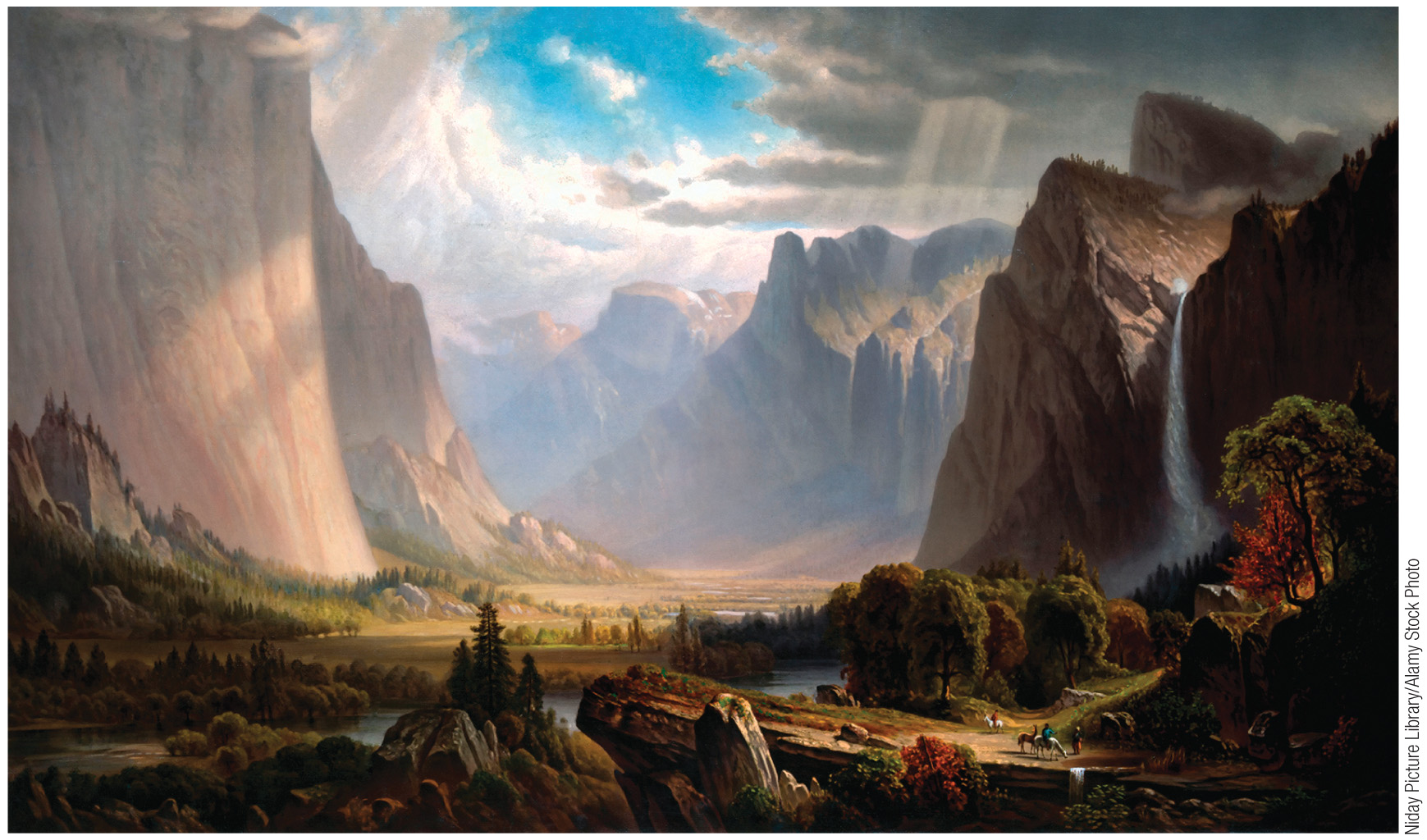
  • Many ecologists argue that biodiversity should be preserved for its intrinsic value — and that economic values are not always easily quantifiable or encompassing.
  • Concern has arisen that seemingly “expendable species” that lack instrumental value may be identified as a justifiable loss.
  • There is also concern that once artificial substitutes are discovered to replace natural services, the ecosystem service will no longer be valued.
5.2 · Valuing Ecosystem Services
Intrinsic Value:

How much is it worth each year to save the lives of 100+ deer and elk?

$
Enter a dollar amount per year.
0 answers Type a dollar amount, then lock it in.
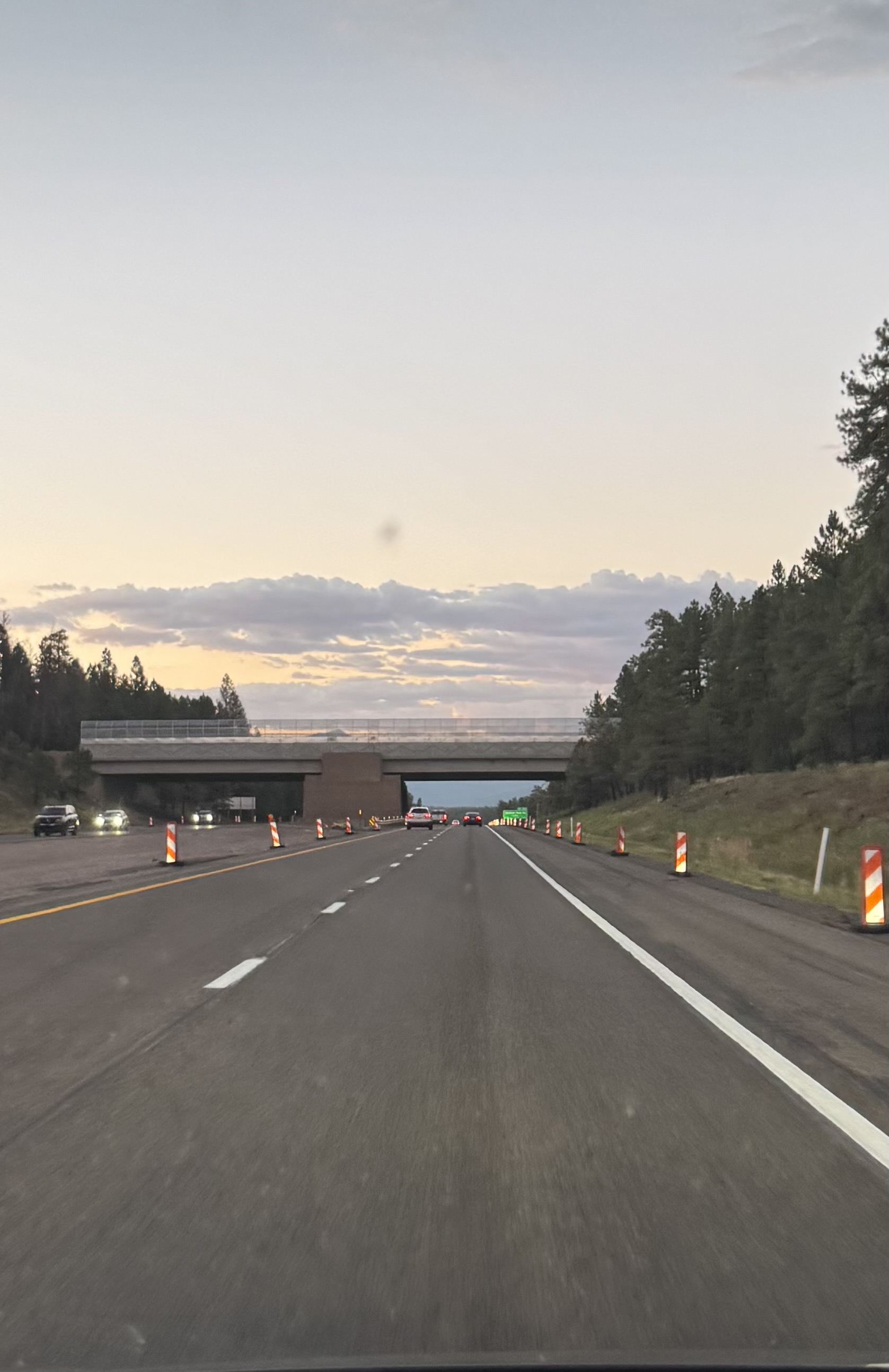
Willard Springs Wildlife Overpass on I-17 near Flagstaff
Willard Springs Wildlife Overpass: $15.8 million
5.3 · What Are Protected Areas?

Protecting Ecosystems and Biodiversity Through Designation

National Parks
Areas of scenic, historical, and/or scientific importance, protected and maintained by the National Park Service. Yellowstone (1872) was the first US national park; its mammal diversity today is similar to when it opened. Establishing a park requires congressional approval.
Monuments & Recreation Areas
The Antiquities Act (1906) empowers the president to set aside federal lands as national monuments without congressional approval. National recreation areas conserve and provide recreation, often around reservoirs created by large dams, such as Lake Mead.
Refuges, Forests & BLM Lands
National wildlife refuges (US Fish and Wildlife Service, est. 1940) conserve fish, wildlife, and plants. National forests (US Forest Service, est. 1905) and Bureau of Land Management lands are managed for multiple uses: timber, grazing, mining, recreation, and conservation.
5.3 · Wilderness Areas and Protected Areas Worldwide

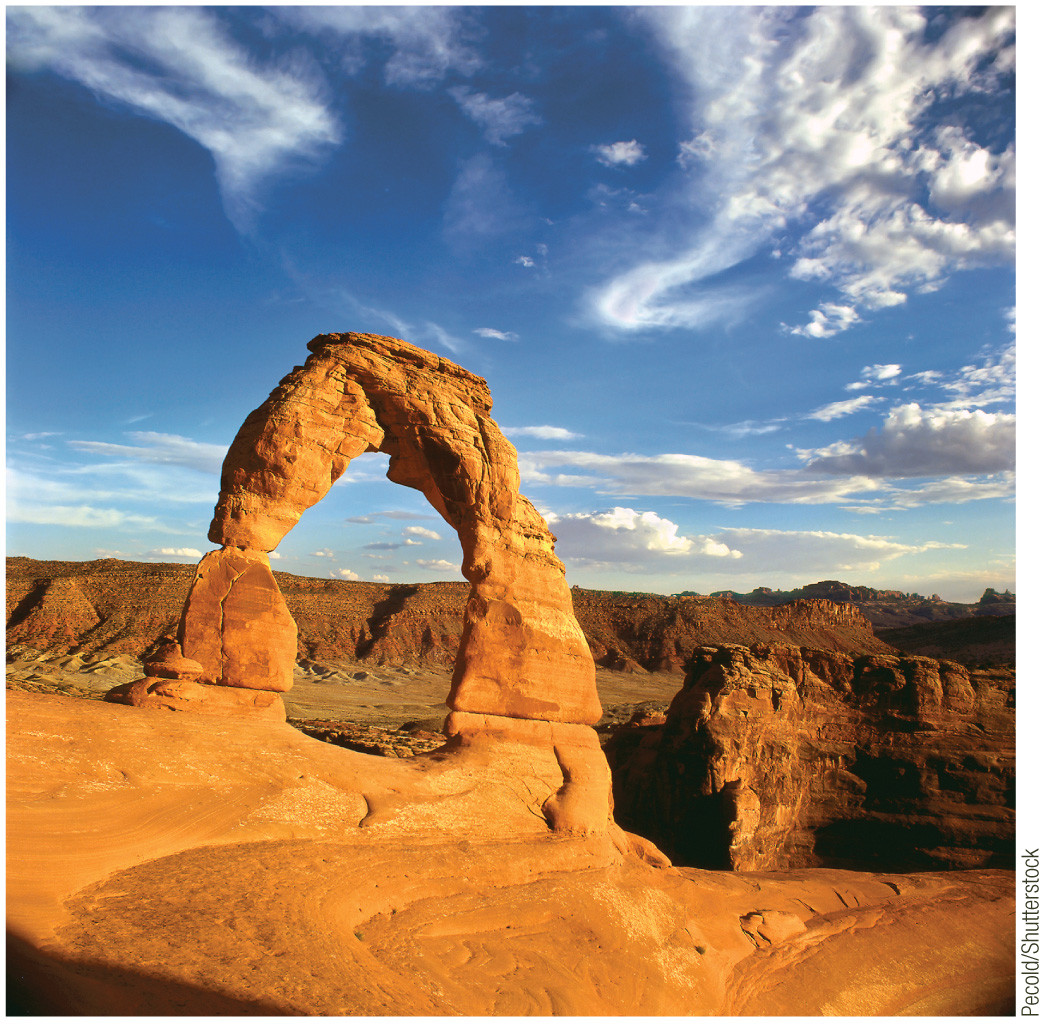
National Parks
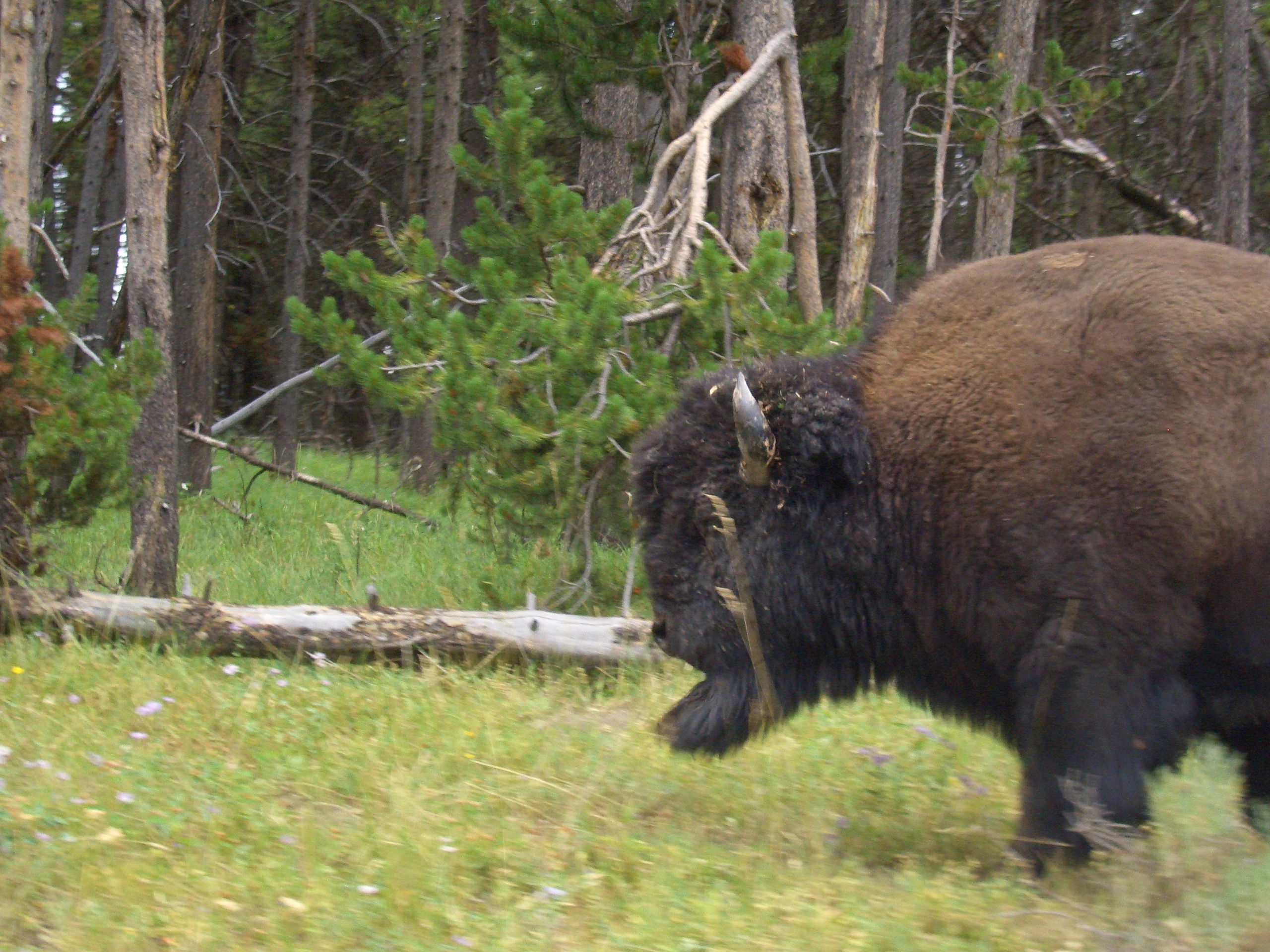
Yellowstone National Park
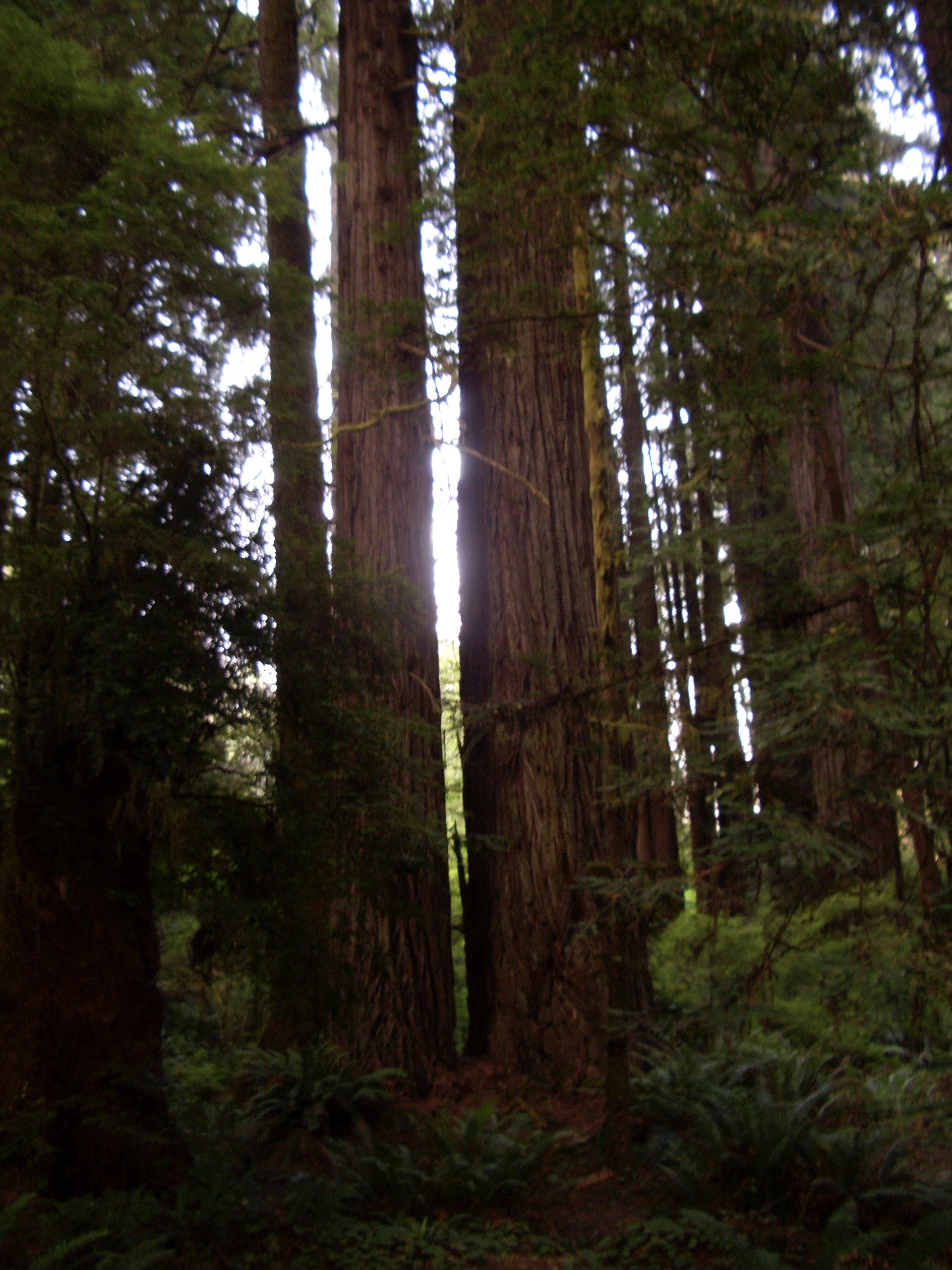
Redwood National Park
5.4 · Limitations of Protected Areas and Alternatives

Ecological Islands and Corridors

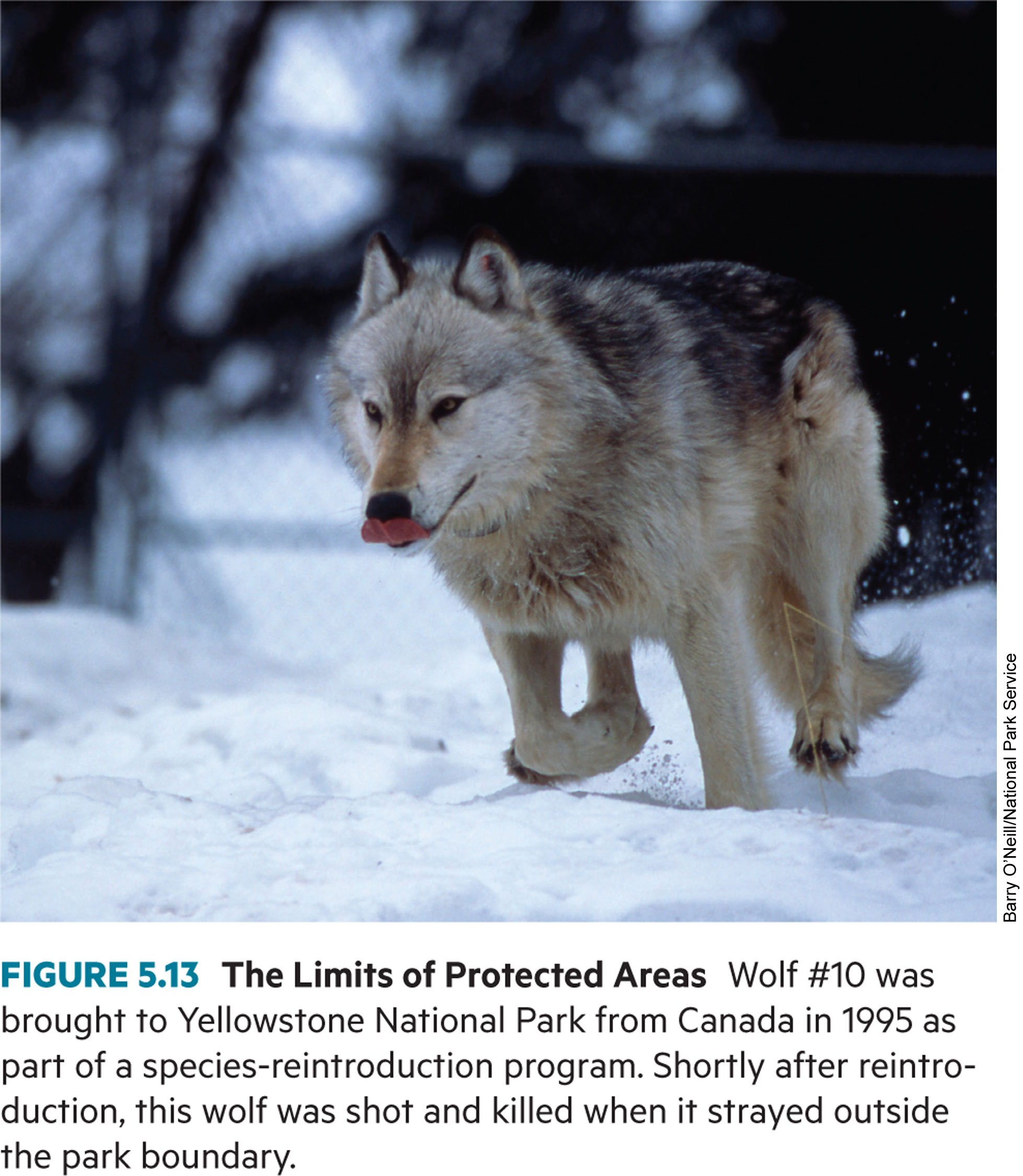
  • Ecological island effect: a protected habitat is isolated amid wider unprotected areas. Wolves suffer from this type of isolation.
  • When protection stops at a boundary, preserving species can fail if the area's size does not meet species' needs.
  • One solution is creating wildlife corridors — protected strips of land that enable migration from one habitat to another.
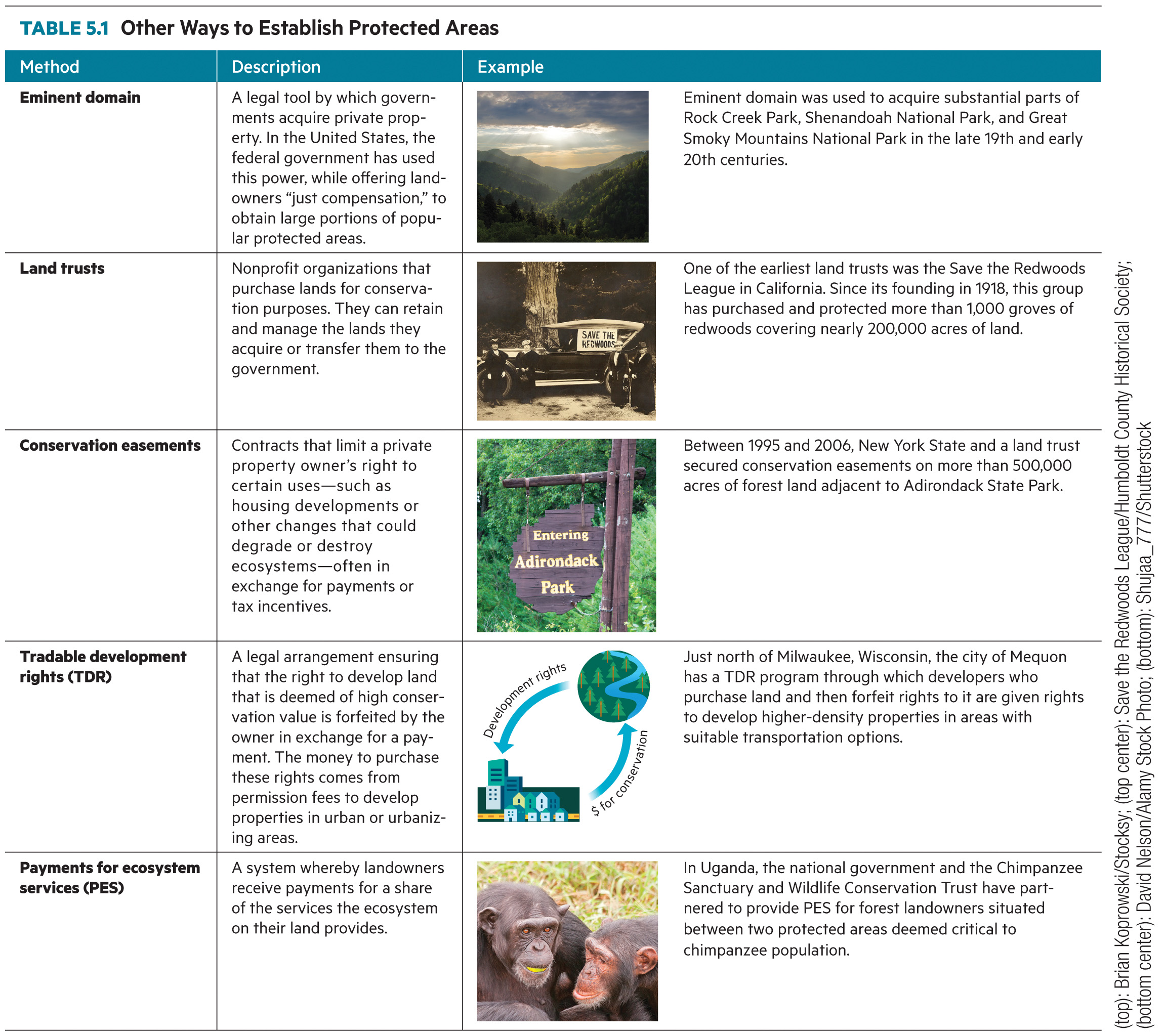
5.4 · Other Ways to Establish Protected Areas

Protection Strategies
5.5 · Can Laws Protect Biodiversity?

US Laws Protecting Species

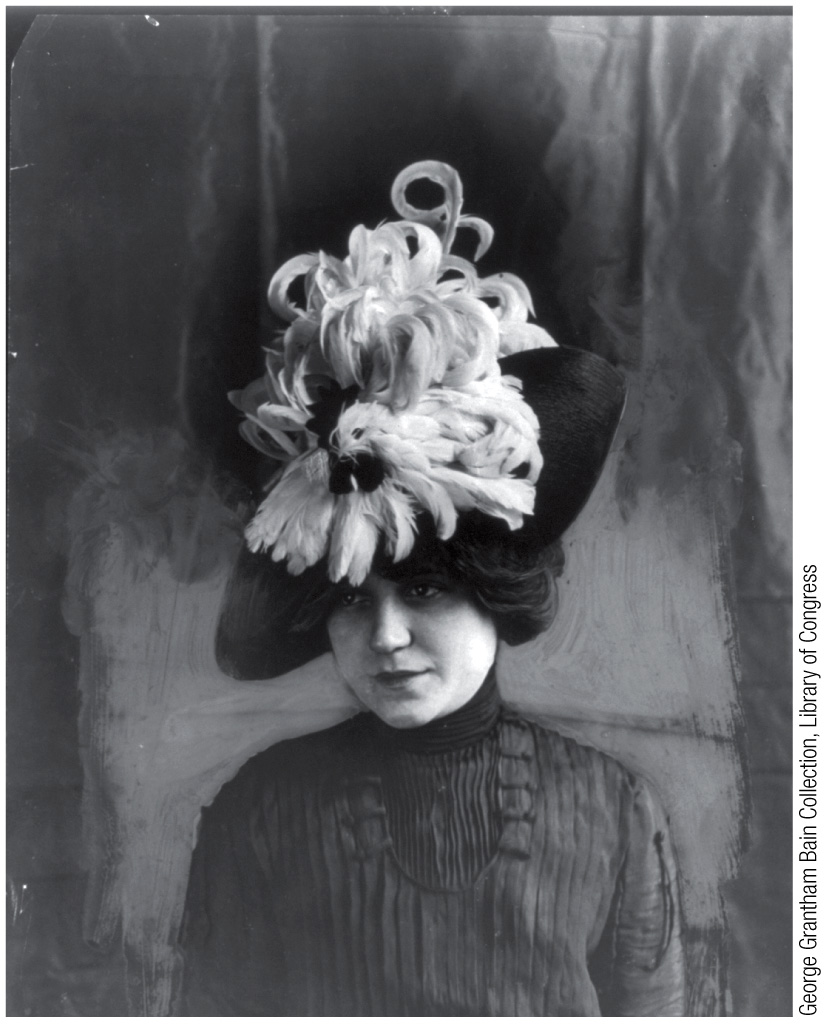
  • Migratory Bird Treaty Act (1918): ratified by the United States and Canada, it protected more than 800 types of birds, such as the bald eagle.
  • Marine Mammal Protection Act (1972): protects whales, dolphins, seals, and manatees.
  • Endangered Species Act (1973): protects both endangered plants and animals from hunting and trapping.
  • 1400 species listed.
  • Since 1973, 9 have gone extinct and 21 have recovered.
  • Forty-six states have species-protection laws regulating species that are not federally listed.
5.6 · What Can Be Done to Reduce Biodiversity Loss?

Deforestation

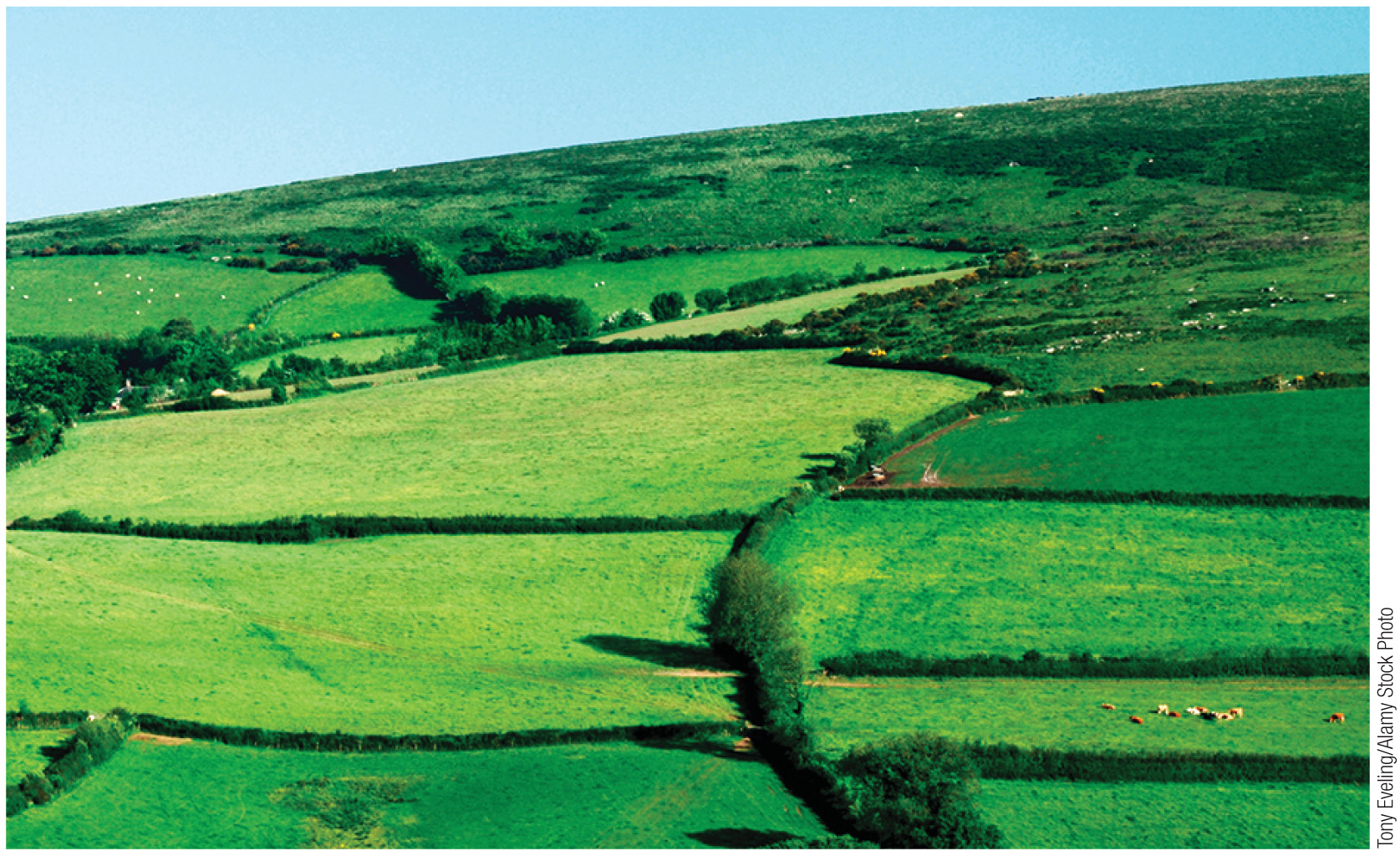
  • Deforestation (the clearing of forested land) destroys habitat for many land-based plants and animals (removing primary producers) and causes soil erosion.
5.6 · What Can Be Done to Reduce Biodiversity Loss?

Drivers of Deforestation

Drivers of forest loss in the Brazilian Amazon.
Our World in Data ↗
5.6 · Sustainable Forest Management

Managing Forests for More Than Timber

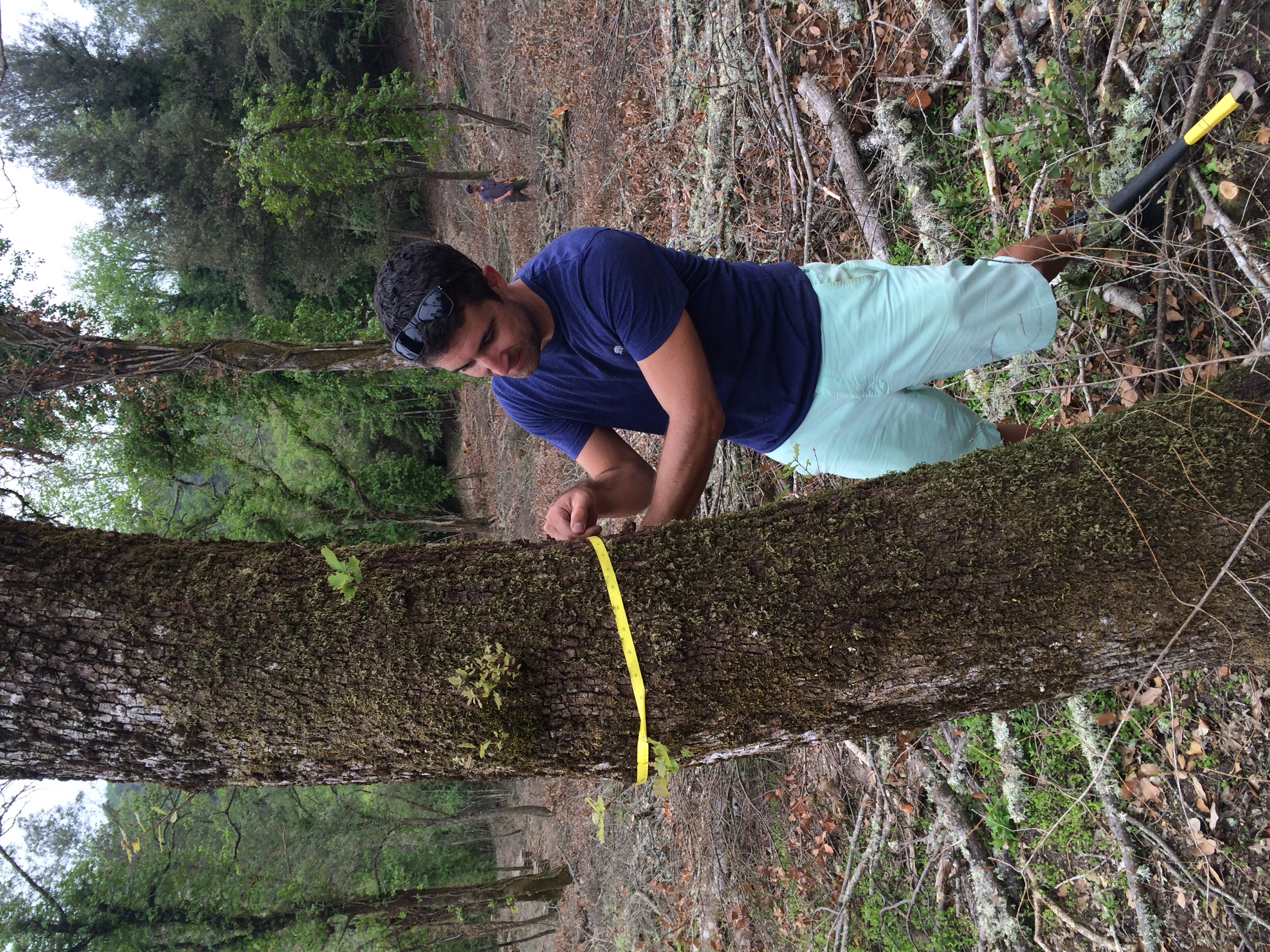
Sustainable forest management: a strategy that manages forests not only for harvest but also for maintaining biodiversity.

  • Leave patches of living trees to reseed harvested areas.
  • Keep patches of dead trees — “snags” — as bird habitat.
  • Prohibit logging on steep slopes to prevent erosion.
5.7 · What Can Be Done to Fix Damage That Has Already Occurred?

Reintroduction and Restoration

Species can be reintroduced to areas where they once lived.

  • In 1986, the US Fish and Wildlife Service captured the remaining California condors and launched a successful captive breeding program.
  • Ecological restoration is the process of assisting the recovery of an entire ecosystem.
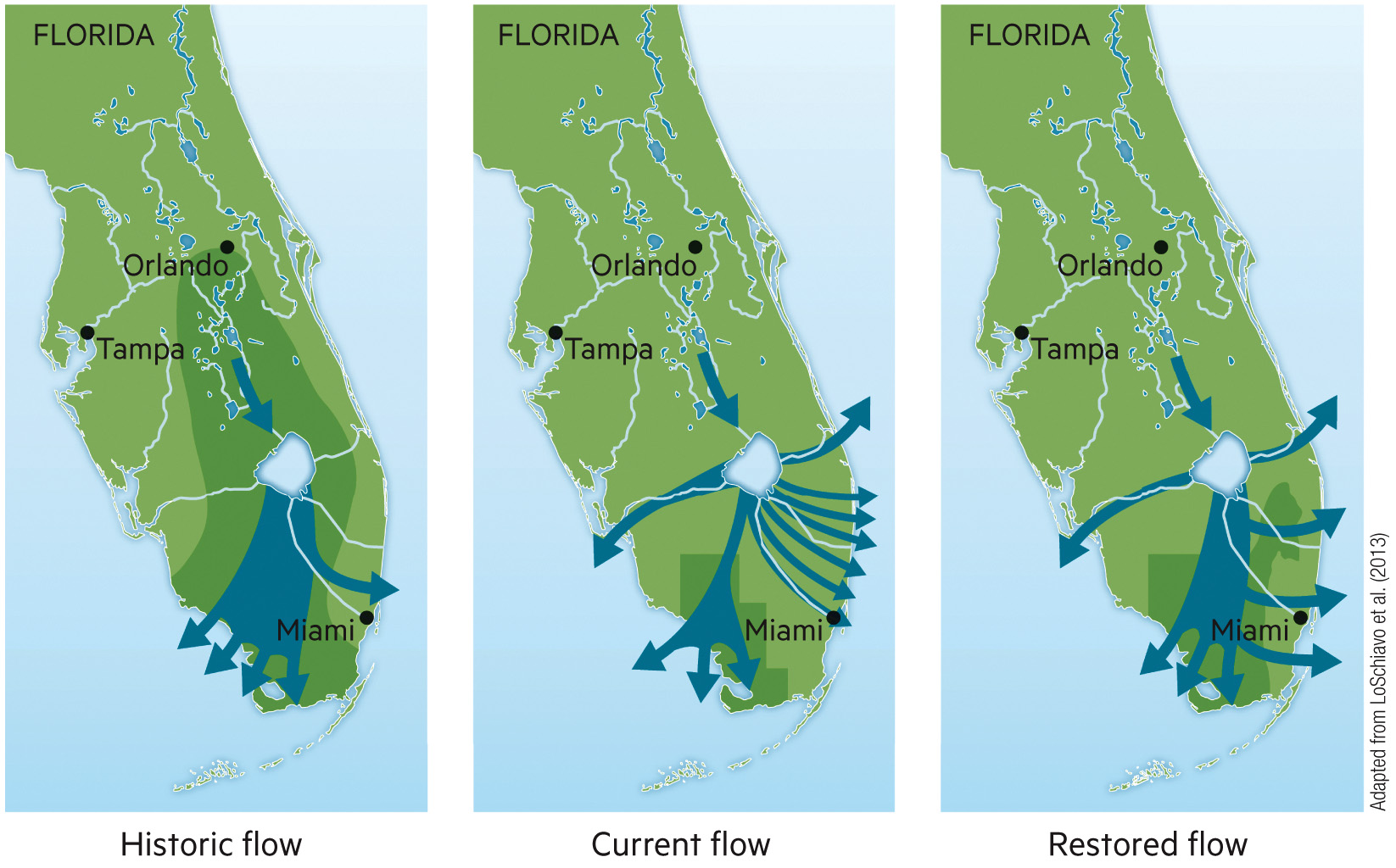
  • The Comprehensive Everglades Restoration Plan (CERP, 1996), developed by the US Army Corps of Engineers and the South Florida Water Management District, aims to restore 70,000 acres of wetlands.
  • National funding, nongovernmental groups, and fines on polluters through the Natural Resource Damage Assessment provide revenue for restoration projects.
  • Rewilding: restoring damaged ecosystems through natural ecological processes.
Chapter 5 · Key Concepts

Conservation: Why Is It Important to Protect Biodiversity?

Sixth Mass Extinction
Human-driven biodiversity loss from habitat destruction, overexploitation, invasive species, and climate change.
Ecosystem Services
Provisioning, regulating, supporting, and cultural benefits from nature.
Instrumental Value
Usefulness of a species for human purposes.
Intrinsic Value
Value of a species in itself, independent of human use.
Ecological Island Effect
Isolated protected areas fail species needing larger ranges.
Wildlife Corridor
Protected land strip enabling migration between habitat patches.
Endangered Species Act
Protects endangered plants and animals from hunting and trapping (1973).
Ecological Restoration
Assisting recovery of entire damaged ecosystems, including rewilding through natural processes.
Module 1 & 2 · Review Game
Module 1 & 2 Review Game

A live, instructor-run review. Join on your own device when the lobby opens.

1 / 27